Opdrachtgever: Ministerie van Onderwijs, Cultuur en Wetenschap
Producent: Staatsdrukkerij
Ontwerp & uitvoering: Jelle van der Toorn Vrijthoff en Wim Zaat
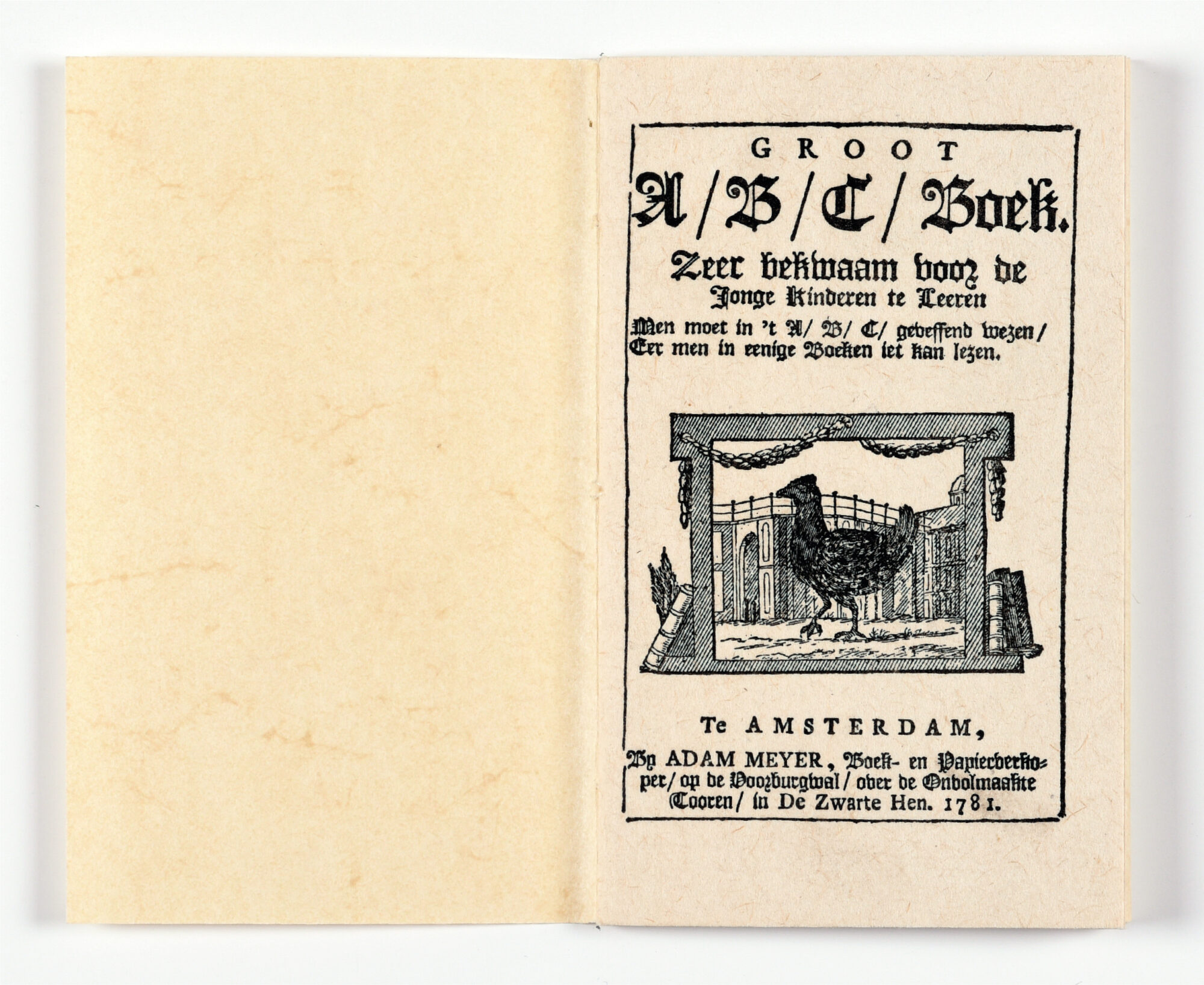
Naar het exemplaar in bezit van de Vrije Universiteit, Amsterdam.
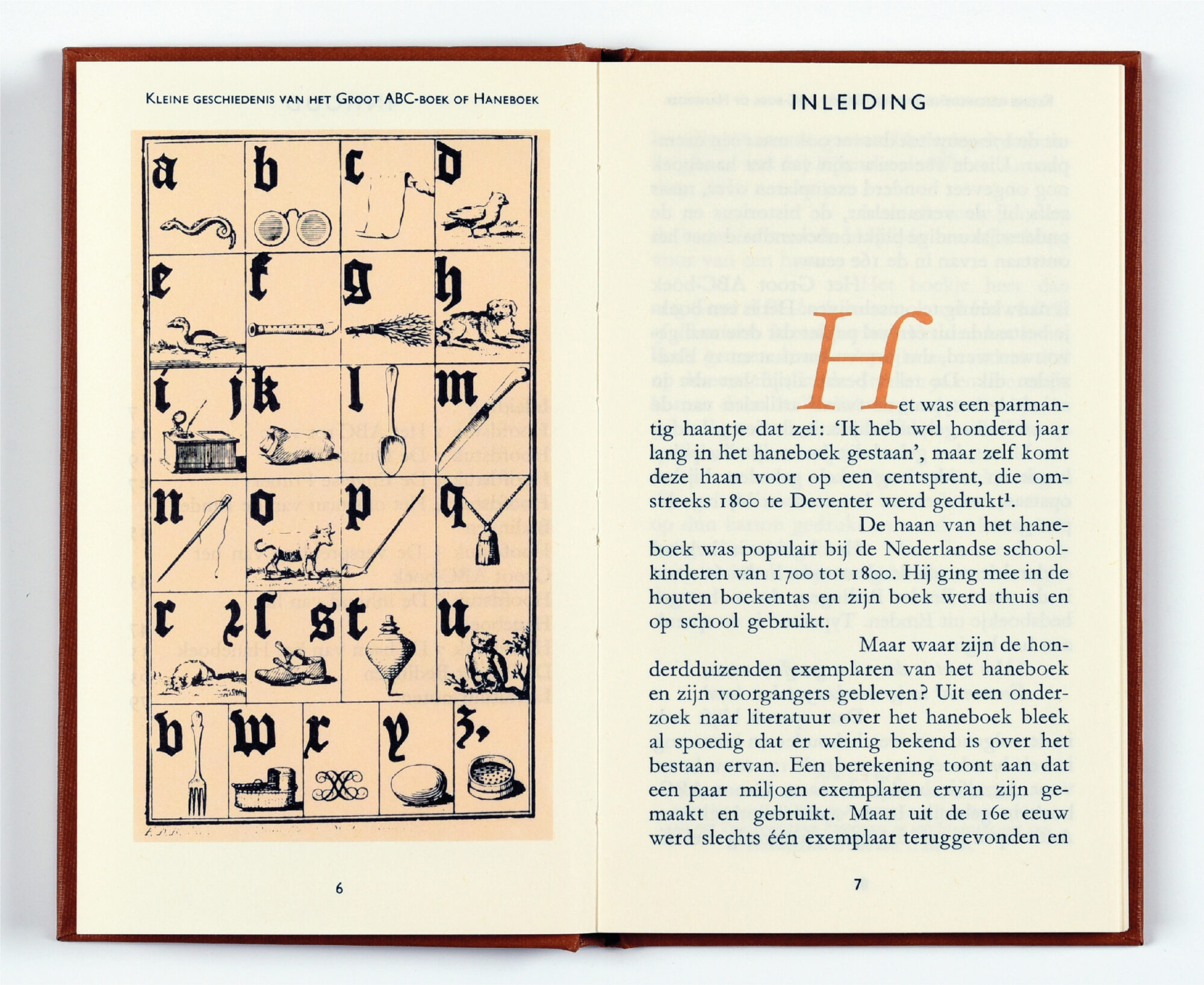
Oorspronkelijk werden ABC-boeken gemaakt om kinderen te leren lezen. De eerste voorbeelden stammen uit de vijftiende eeuw en zijn daarmee ook de eerste ‘kinderboeken’. Een beroemd negetiende-eeuws voorbeeld is het ‘A is een aapje’. Dit is al gelijk een voorbeeld van een ABC-boek, waarin de letternamen worden gebruikt en niet de klanken zoals ze in het huidige leesonderwijs worden benoemd.
Bij onderstaande ABC- of alfabetboeken staat specifiek aangegeven of ze klankzuiver zijn. De niet klankzuivere boeken zijn desondanks toch leuk en bijzonder genoeg om te kunnen gebruiken en er plezier aan te beleven. De voorgeschiedenis van het Nederlandse ABC-boek is in grote lijnen wel bekend. Als we de film terugdraaien tot het begin van de achttiende eeuw, dan krijgen we het volgende beeld. Van Middelburg tot Leeuwarden verschijnen bij allerlei uitgevers tientallen edities van het Groot ABC of Haneboek, waaruit praktisch elk Nederlands kind sinds de Reformatie op school leerde lezen. Daarvan zijn ongeveer veertig exemplaren bewaard gebleven.

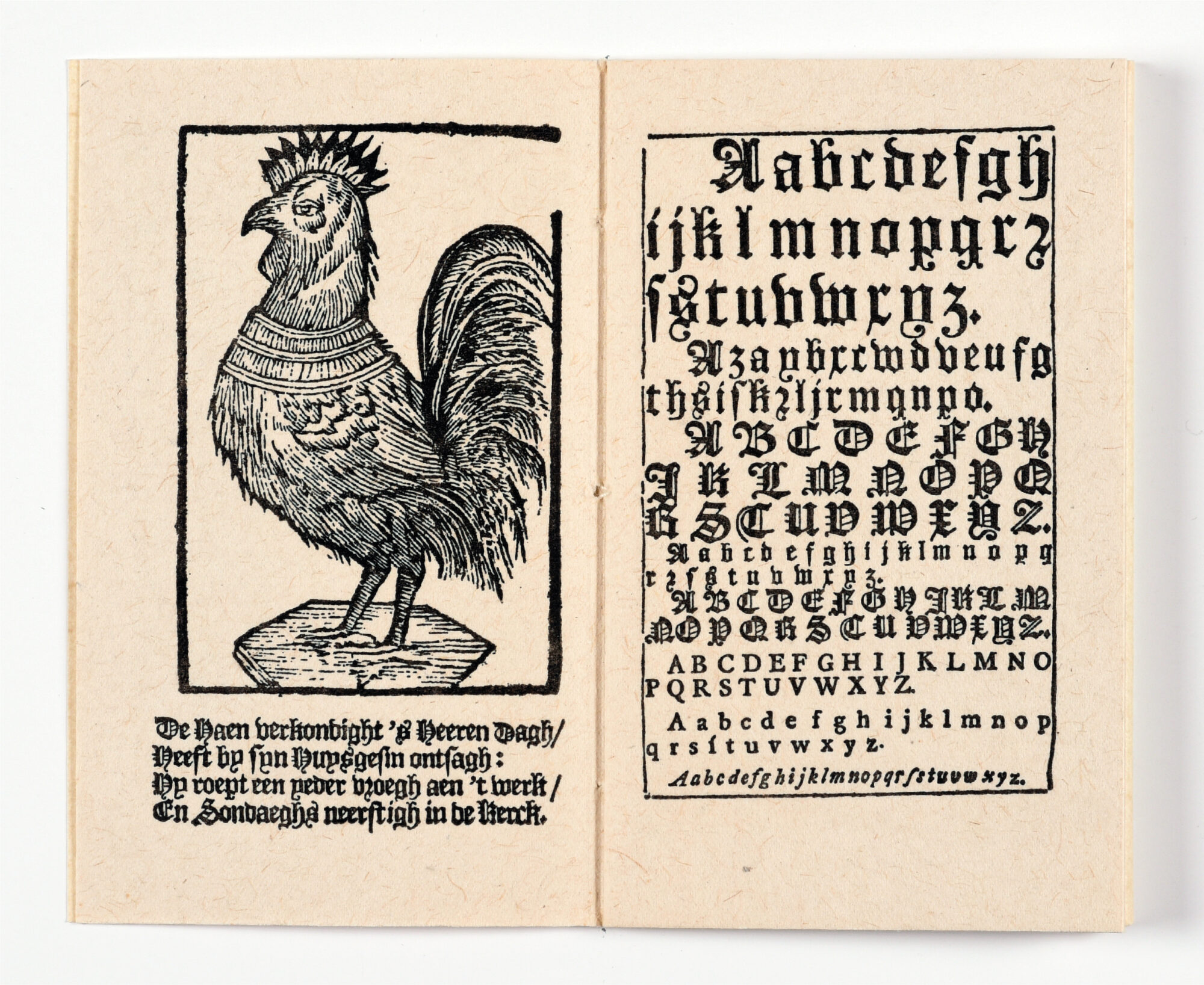
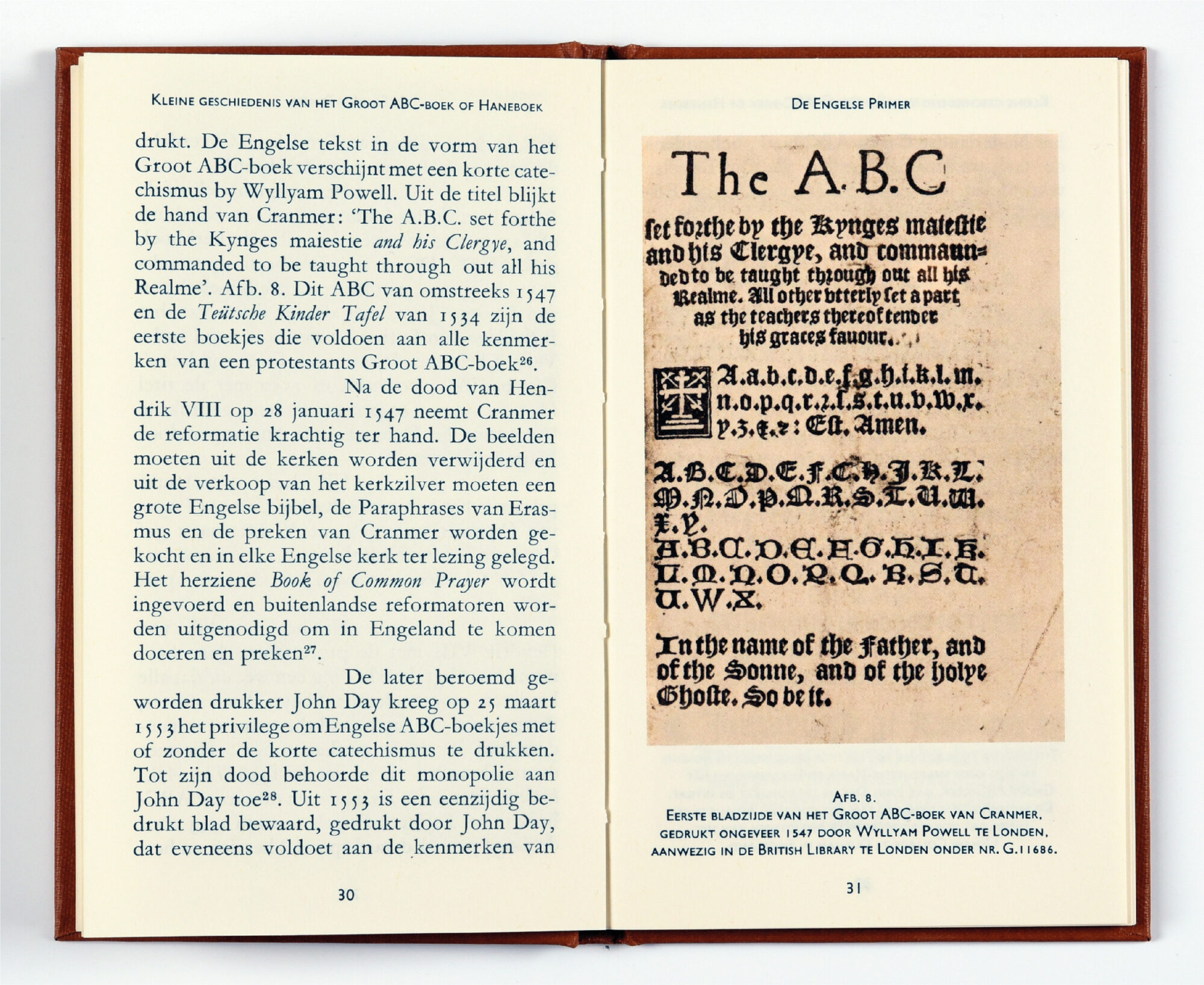
Het haneboek met zijn zestien bladzijden in octavo-formaat was voor ruim driekwart gevuld met protestants-christelijke teksten. Op het alfabet in diverse lettervormen en de lijst van vocalen en lettergrepen volgden steevast: het Onzevader, De Twaalf Artikelen van het Geloof, een doopformule, de Tien Geboden met samenvatting, Christus’ woorden bij het Laatste Avondmaal, het morgen- en avondgebed, twee gebeden voor en na het eten, en ten slotte een blad met levensregels naar de letters van het ABC. Het Groot ABC diende dus tegelijk voor leesonderwijs én voor onderricht in de ‘ware religie’.
Ogenschijnlijk lijken al die achttiende-eeuwse schoolboekjes afgietsels van hetzelfde model. Wie er één heeft gezien, heeft ze allemaal gezien. Maar schijn bedriegt. Want afgezien van de kleine variaties op het titelblad – soms met, soms zonder haan of schoolklas in houtsnede – vinden we bepaalde confessionele verschillen in de godsdienstige hoofdinhoud. Allereerst hadden de Luthersen hun eigen aangepast A/B/C/ Boeksken, iets wat zeker ook gold voor katholieke leerlingen